
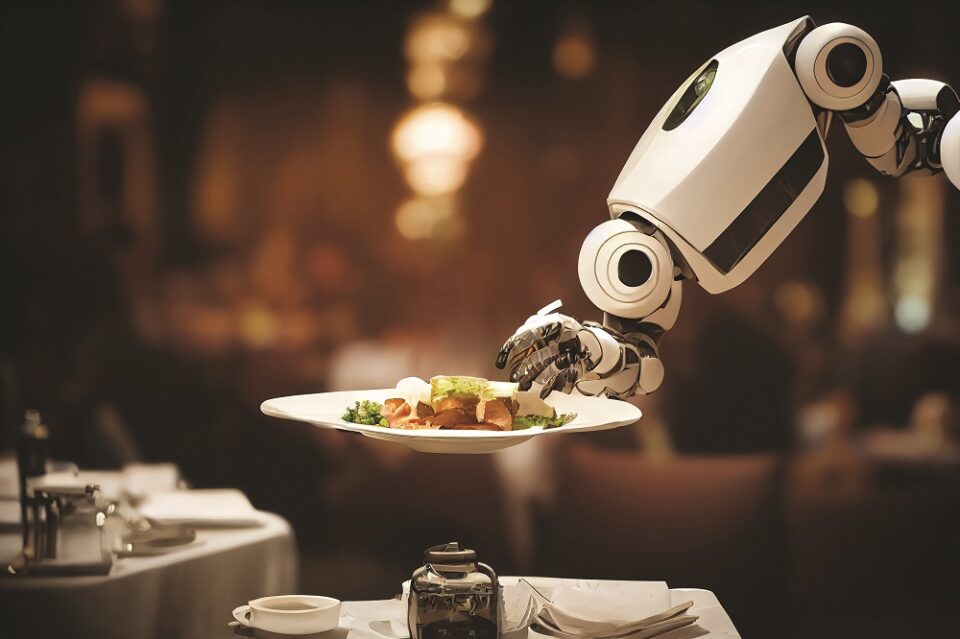
Food and beverage manufacturing presents a distinct set of safety challenges. Unlike many other industrial sectors, these facilities must strike a delicate balance between production efficiency, strict hygiene controls, and a highly regulated compliance environment. On top of that, worker safety on the production floor remains an ever-present concern—especially in fast-paced settings with high staff turnover and physical demands.
Maintaining this balance is no easy task. A lapse in sanitation, a missed PPE violation, or a failure to detect repetitive strain behaviour can lead to incidents that impact both employees and consumers. Manual safety protocols, while important, are increasingly being stretched thin. Enter artificial intelligence (AI) and computer vision—technologies that are now enabling food manufacturers to proactively manage safety in a smarter, more consistent way.
As food and beverage operations scale in complexity, the ability to monitor risk in real time and intervene early has never been more critical. AI safety platforms offer precisely this capability, delivering the insights needed to create safer environments, strengthen compliance, and support a healthier, more resilient workforce.
Why AI is a Game-Changer for the Sector
Food production environments are visually complex, heavily regulated, and sensitive to cross-contamination. With many workers on the floor and multiple shifts operating daily, it’s nearly impossible to rely on manual observation alone for reliable safety oversight. That’s where AI steps in.
Computer vision systems trained on food industry-specific datasets can automatically detect:
- PPE compliance: Whether workers are wearing the right gear for sanitation, temperature zones, or allergen control
- Sanitation verification: Confirmation that handwashing stations are being used and proper cleaning protocols are followed
- Behavioural safety: Unsafe movement, shortcuts near machinery, or patterns that precede accidents
- Ergonomic risk factors: Monitoring repetitive movements and poor posture that can lead to musculoskeletal injuries
These applications not only provide visibility into current risk—they also lay the groundwork for longer-term improvements in training, operations, and team accountability.
Supporting Regulatory Compliance
The food and beverage industry is governed by some of the most stringent safety standards globally. Whether it’s GFSI schemes, local food safety authority requirements, or internal audit frameworks, documenting compliance is essential—and time-consuming.
AI tools simplify this by automatically logging safety violations, PPE adherence, and zone compliance. Footage is timestamped, searchable, and easily exportable for use during internal reviews or external inspections. Supervisors can also view safety dashboards showing trends across days, shifts, or even specific lines or departments.
This automation reduces the administrative burden on safety and quality managers, freeing them to focus on coaching, training, and strategic improvements.
Enhancing Training and Culture
High turnover rates are a common reality in food and beverage manufacturing. New hires may receive basic training, but consistent reinforcement of safety protocols can be hard to maintain over time—especially without objective visibility into what’s really happening on the floor.
AI provides a solution by identifying patterns and behaviours that suggest a need for retraining or coaching. For example, if one team regularly triggers sanitation violations during a night shift, managers can use that data to offer targeted support. Visual feedback—such as anonymised video clips—can also be shared during toolbox talks to reinforce expectations without blame.
Importantly, this shifts the safety culture from reactive enforcement to proactive learning. Workers become more engaged, and managers are empowered to lead with facts, not assumptions.
Safety Data That Drives Productivity
One of the lesser-discussed benefits of AI in food manufacturing is its potential to optimise workflow. Many safety incidents stem not from negligence, but from poorly designed processes—crowded workstations, excessive repetition, or unclear visual cues.
By analysing behaviour across zones, AI platforms can highlight:
- High-risk manual processes: Repetitive tasks that could benefit from ergonomic redesign
- Inefficient layouts: Areas where staff consistently bypass safe paths or struggle with poor visibility
- Excessive movement: Identifying where workers make unnecessary trips or handle materials inefficiently
This insight not only reduces injury rates but improves overall throughput and team efficiency—making safety a business enabler, not just a compliance requirement.
What to Look for in a Platform
For food and beverage manufacturers exploring AI safety solutions, it’s important to choose a platform designed for hygiene-sensitive, high-throughput environments. Key capabilities should include:
- Compatibility with hygiene-critical settings: Cameras must operate reliably in cold storage, high-moisture, or cleanroom areas
- Real-time PPE and sanitation alerts: Fast intervention is essential in food production to prevent contamination or escalation
- Behavioural tracking tools: Systems should log violations and provide summary data by shift, location, or employee group
- Clear, exportable reporting: Safety data should be easy to pull for compliance audits or team feedback sessions
Vendors like Protex AI offer platforms purpose-built for this sector, with user-friendly interfaces and robust support for both safety managers and IT teams.
Results You Can Measure
According to Protex AI’s customers in the food and beverage sector, measurable safety gains are often realised within weeks of implementation. Common results include:
- Fewer PPE-related violations and improved uniform compliance
- Faster detection and resolution of sanitation issues
- Reduced repetitive strain injuries through ergonomic tracking
- Greater staff participation in safety discussions and improvement plans
These results don’t just support audit readiness—they create a safer, more confident workforce and a more resilient operation overall.
The food and beverage industry may never be completely risk-free. But intelligent systems working alongside human teams can make it significantly safer, more consistent, and more compliant with evolving standards. AI isn’t replacing human safety leaders—it’s giving them the tools to lead more effectively, with clarity, accountability, and insight.
