
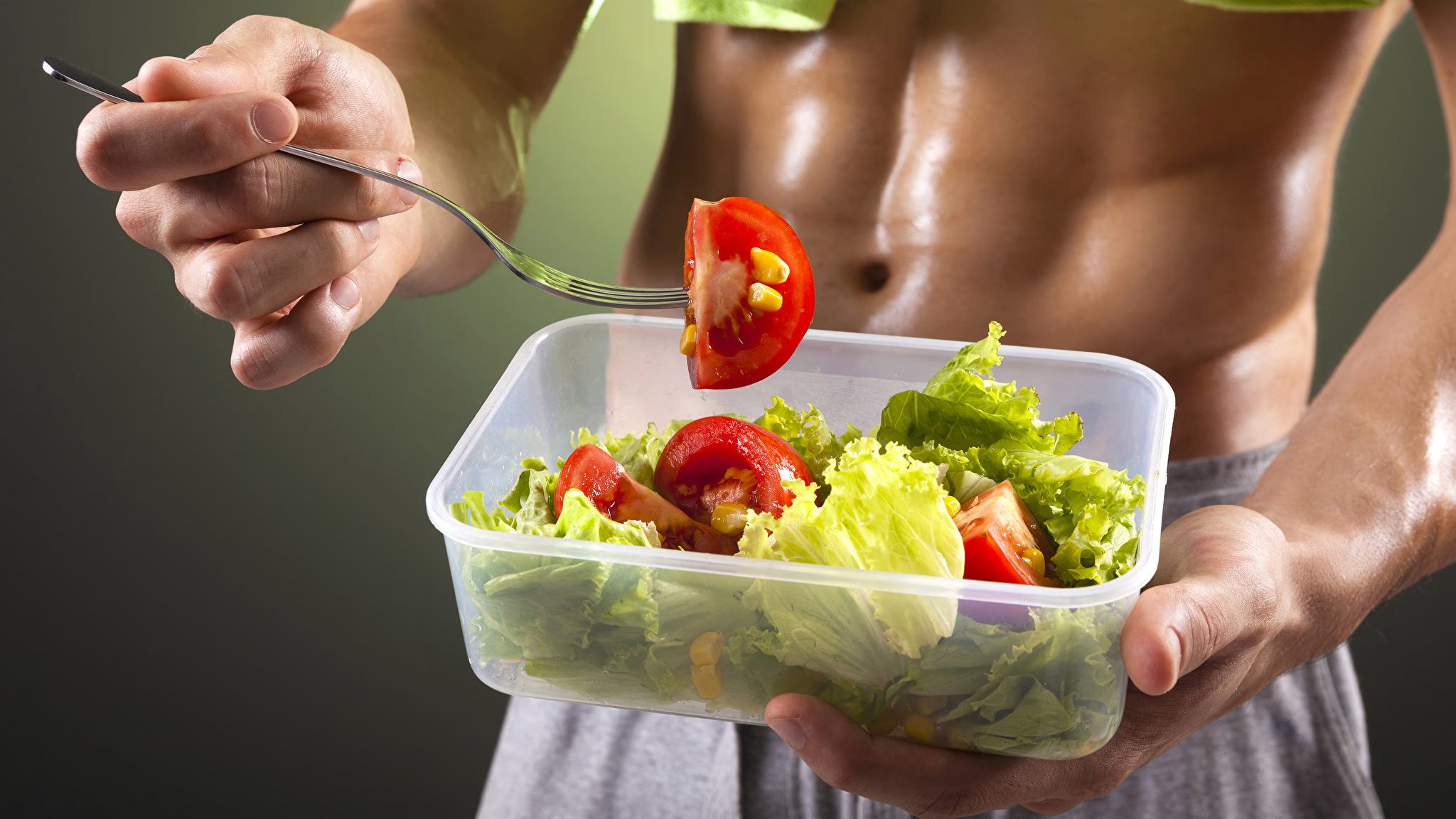
Nutrition advice for people who train regularly tends to arrive in one of two forms. Either it is so generic as to be useless, the standard eat more protein, drink more water, avoid processed food advice that tells you nothing you did not already know, or it is so specifically calibrated to Western dietary contexts that it bears almost no relationship to how people in Singapore actually eat. Neither version is particularly helpful for someone trying to fuel their training intelligently while living in one of the world’s great food cities.
This guide takes a different approach. It starts from the reality of what gym-goers at a fitness gym Singapore level of training commitment actually eat, which in Singapore means hawker centres, coffee shops, office canteens, food delivery apps, the occasional restaurant meal, and whatever can be assembled quickly on a weeknight. It then builds a practical performance nutrition framework around that reality rather than asking you to abandon the way you eat in favour of meal-prepped chicken and broccoli.
Why Generic Nutrition Advice Does Not Work for Singaporeans
Singapore’s food culture is one of the most diverse and complex in the world, drawing on Chinese, Malay, Indian, Peranakan, and countless other culinary traditions. The result is a food environment that offers extraordinary variety but also presents specific nutritional characteristics that Western-centric nutrition advice is not designed to address.
Many of Singapore’s most beloved dishes are high in refined carbohydrates and sodium, moderate in protein, and relatively low in the kind of dietary fats that feature prominently in Western performance nutrition frameworks. Hawker food is typically cooked in significant amounts of oil. Portion control is complicated by the social dimension of eating, where sharing dishes and ordering generously is culturally expected.
At the same time, Singapore’s food environment offers some genuinely excellent performance nutrition options if you know where to look and how to make informed choices. The key is understanding your nutritional requirements clearly enough to make strategic selections from the food environment you actually inhabit, rather than trying to impose an entirely different eating pattern that is unlikely to be sustainable long term.
Understanding Your Macros Without Giving Up Local Food
Macronutrient balance, the ratio of protein, carbohydrate, and fat in your diet, is the primary nutritional lever for supporting training performance and body composition goals. Understanding your personal macronutrient targets gives you a framework for making food choices that support your goals without requiring you to count every gram or abandon local food.
Protein is the most critical macronutrient for gym-goers because it provides the amino acids needed for muscle protein synthesis and repair. A target of 1.6 to 2.2 grams of protein per kilogram of bodyweight per day is the range most consistently supported by the research for individuals engaged in regular resistance training. For a 70kg person, this means between 112 and 154 grams of protein per day, spread across meals.
Carbohydrates are the primary fuel source for moderate to high-intensity training and are critical for glycogen replenishment between sessions. The appropriate amount varies based on training volume and intensity, but most people training three to five times per week will perform better with carbohydrates as a significant component of their diet rather than trying to maintain low-carbohydrate eating while training hard.
Dietary fat supports hormonal production, fat-soluble vitamin absorption, and the inflammation resolution that is part of the muscle repair process. The type of fat matters: emphasising sources of omega-3 fatty acids and monounsaturated fats while moderating saturated fat intake from hawker cooking oil is a practical approach.
The Best Pre-Workout Meals You Can Get at a Singapore Hawker Centre
The goal of a pre-workout meal is to provide sufficient carbohydrate for fuel and enough protein to prime muscle protein synthesis, without leaving you so full that blood flow to working muscles is compromised during training. Timing matters: a larger meal works best two to three hours before training, while a lighter snack can be consumed 30 to 60 minutes before.
High-Carbohydrate Options for Energy Loading
Several hawker staples make excellent pre-workout carbohydrate sources:
- Chicken rice, ordered with a focus on the rice portion and lean breast meat, provides a well-balanced combination of carbohydrate and protein with relatively moderate fat
- Yong tau foo with noodles and a broth-based rather than fried selection provides moderate carbohydrate and a range of protein sources from the tofu and fish-based items
- Ban mian soup with minimal added chilli oil provides complex carbohydrate from the noodles, protein from the egg and minced meat, and a hydrating broth that contributes to pre-session fluid intake
- Nasi lemak ordered with grilled rather than fried protein and with awareness of the high fat content from the coconut rice and sambal, makes a reasonable pre-training option when timed at least two hours before training
Protein-Rich Choices That Are Light on the Stomach
For pre-workout meals consumed closer to training, lower fat and fibre content makes digestion faster and reduces the risk of gastrointestinal discomfort during exercise:
- Steamed fish with rice at a Chinese food stall provides high-quality lean protein with easily digestible carbohydrate
- Sliced fish noodle soup provides lean protein from the fish with moderate carbohydrate from the noodles and excellent hydration from the broth
- Tofu-based dishes such as chawanmushi or soft silken tofu preparations provide easily digestible protein for those who prefer lighter pre-training options
Post-Workout Nutrition: What to Eat After Training in Singapore
The post-workout nutrition window is real, though its importance has often been overstated. The primary goal after training is to begin restoring glycogen and providing amino acids for muscle protein synthesis. The urgency of achieving this within 30 minutes has been revised by more recent research, with the consensus now suggesting that a protein and carbohydrate-containing meal consumed within one to two hours of training is adequate for most people.
The Best Local High-Protein Recovery Meals
Singapore’s food environment offers genuinely excellent post-workout nutrition options:
- Thunder tea rice, which combines brown rice with a variety of plant-based protein sources including tofu and pulses alongside leafy greens, is one of the most nutritionally complete post-workout hawker meals available
- Economy rice, known locally as cai fan, allows for customisation of protein and vegetable portions and can be assembled into an excellent recovery meal by selecting lean protein options such as steamed fish, tofu, or braised egg alongside fibrous vegetables
- Chwee kueh with chai poh, while not a complete meal in itself, provides easily digestible carbohydrate for glycogen replenishment and works well as a lighter post-session option followed by a protein source
- Sup kambing or bak kut teh provide broth-based hydration alongside moderate protein and are particularly useful post-workout options that also support the electrolyte replenishment needed after sweaty Singapore training sessions
Timing Your Post-Workout Meal Around a Busy Schedule
One of the most common practical challenges for Singapore gym-goers is the timing mismatch between post-workout nutrition needs and the realities of a busy schedule. If you train during lunch and cannot eat a full meal immediately after, a protein supplement consumed immediately post-training followed by a full meal within two hours is a practical solution. If you train after work and the hawker centre near your gym involves a queue, a banana and a glass of milk consumed immediately while you wait provides a practical interim nutrition bridge.
How to Eat Around Social Dining Without Losing Progress
Singapore’s food culture is intensely social. Business meals, family gatherings, weekend hawker expeditions with friends, and festive eating occasions are woven into the fabric of daily life in ways that make the standard nutrition advice of simply eating less at restaurants feel naive at best and antisocial at worst.
A more practical and sustainable approach is to anchor your nutrition strategy around your training-adjacent meals, the meals immediately before and after your gym sessions, while being more flexible with social eating occasions. This approach applies the nutritional precision where it matters most for training performance and recovery, while preserving the social and cultural dimensions of eating that are important for quality of life and dietary sustainability.
At zi char restaurants and shared dining occasions, specific strategies that help maintain nutritional quality without disrupting the social experience include ordering steamed rather than deep-fried preparations of fish and tofu, prioritising vegetable dishes alongside your protein choices, being mindful of the sauces and gravies that often contain significant amounts of sugar and oil, and controlling rice portions while not restricting protein or vegetable intake.
Hydration in a Tropical Climate: More Than Just Drinking Water
Singapore’s ambient temperature and humidity create sweat rates that are meaningfully higher than in temperate climates, and this affects both training performance and daily hydration needs in ways that are frequently underestimated.
The practical hydration target for an active person in Singapore is approximately 35 to 45 millilitres of fluid per kilogram of bodyweight per day, adjusted upward based on training duration and ambient conditions. A 70kg person training for 60 minutes in Singapore should be targeting approximately 3 to 3.5 litres of total fluid intake on training days.
Electrolyte replenishment is as important as fluid volume. Sodium, potassium, and magnesium are lost in significant quantities through sweat, and replacing fluid without replacing electrolytes can actually worsen cellular hydration by diluting the electrolyte concentration in the blood. Coconut water is a genuinely useful electrolyte source that is widely available in Singapore and provides a natural source of potassium and magnesium. Isotonic sports drinks serve a similar function and are appropriate during or immediately after high-intensity sessions.
How InBody Analysis at TFX Helps You Align Nutrition With Training Goals
Nutrition strategy without objective body composition data is essentially guesswork. You might feel like your approach is working, or you might feel like it is not, but without measurement you have no way to confirm whether your subjective sense reflects what is actually happening at the tissue level.
InBody analysis, available at TFX facilities, provides a detailed breakdown of body composition including skeletal muscle mass, fat mass, visceral fat level, and body water distribution. This data serves as both a starting point and an ongoing feedback mechanism for your nutrition strategy. If your skeletal muscle mass is declining despite adequate protein intake, the data might point to insufficient total caloric intake or training volume issues. If visceral fat is not reducing despite overall calorie management, it might indicate that stress and cortisol are playing a larger role than the nutritional variables you are managing.
Using InBody data at regular six to eight week intervals to assess the body composition response to your nutrition and training approach gives you the information needed to make targeted adjustments rather than changing multiple variables simultaneously and being unable to determine what is actually driving the change.
TFX Singapore members can access InBody analysis as part of their membership experience, with fitness consultation support to help interpret the results and apply them to their training and nutrition strategy.
Frequently Asked Questions
Is it possible to build muscle on a local Singaporean diet without buying protein supplements?
Yes, absolutely. Protein supplements are convenient but not necessary. Singapore’s food environment provides abundant high-quality protein sources including fish, chicken, eggs, tofu, tempeh, and legumes that can meet daily protein targets for most gym-goers through food alone. The challenge is usually one of meal planning and awareness rather than food availability. Tracking your protein intake for one to two weeks using a nutrition app can be a useful exercise for identifying where gaps in your daily intake exist and which meal adjustments would most effectively close them.
What is the best hawker food to eat within 30 to 60 minutes of finishing a gym session?
For a quick post-workout option, you are looking for something relatively high in protein and moderate in carbohydrate, with lower fat content to allow faster digestion. Good options within the hawker context include sliced fish soup with bee hoon, steamed chicken breast from a chicken rice stall, tofu-based dishes, or chawanmushi. If you need something even quicker, a hard-boiled egg from the drink stall alongside a kaya toast provides a compact protein and carbohydrate combination that digests easily.
How do I manage eating out at zi char or client dinners while staying on a fitness nutrition plan?
The most practical approach is to prioritise protein and vegetable dishes while being mindful of portion sizes for high-carbohydrate and high-fat items. At zi char, steamed fish, tofu dishes, stir-fried leafy vegetables, and steamed eggs are excellent choices. Avoid being overly restrictive during social meals, as the stress and social friction of extreme dietary rigidity at business dinners is itself counterproductive to health. A 90 to 95 percent adherent nutrition approach that allows flexibility for genuine social occasions consistently outperforms a rigid approach that leads to complete abandonment after one difficult social week.
Should I eat before an early morning gym session or train on an empty stomach?
This depends on your training intensity and personal tolerance. For moderate-intensity sessions lasting 45 to 60 minutes, many people perform adequately in a fasted state, particularly if they trained consistently fasted and their body has adapted to it. For high-intensity sessions or strength training where you are pushing near-maximal efforts, a small pre-training snack containing 20 to 30 grams of carbohydrate and some protein, consumed 20 to 30 minutes before training, typically improves performance meaningfully. A banana with a small amount of peanut butter, or a glass of milk with a piece of fruit, works well in this context.
How much water should I drink on a day I train at an air-conditioned gym in Singapore?
Even when training in an air-conditioned facility, sweat losses during a 60-minute moderate to high-intensity session can range from 0.5 to 1.5 litres depending on the individual and training intensity. Adding this to your daily baseline fluid needs means that on training days, a total fluid intake of 3 to 3.5 litres is a reasonable target for most people. Practical indicators that you are adequately hydrated include pale yellow urine throughout the day and the absence of headaches or fatigue in the hours after training. If you are experiencing either of these symptoms regularly after gym sessions, increasing your fluid and electrolyte intake before and during training is likely to help.
